A Lean practitioner can know every tool in the handbook and still struggle to create lasting improvement. The decisive question is whether we can help others understand the problem, contribute their knowledge, test a better way and continue improving after we leave the room.
Training and facilitation are therefore not optional “soft skills.” They are part of the delivery system for Lean itself. A practitioner who can teach, involve and guide others increases the organisation’s capacity to solve the next problem.
The real test of Lean practitioner skills
It is tempting to evaluate a Lean professional by the number of methods they know. Yet a transformation is fragile when the specialist is the only person who can see a problem, run an analysis or lead an improvement workshop. The organisation may produce activity without developing capability.
A stronger test is what happens when the practitioner is absent. Can the team describe the standard, recognise a deviation and discuss causes without blaming someone? Can a team leader coach the next experiment? If so, knowledge has moved into daily work. If not, the expert may have delivered a solution but not a learning process.
The aim is not to be the smartest person in every workshop. It is to help those closest to the work think clearly, learn deliberately and take responsible action.
Three roles: expert, trainer and facilitator
Lean work requires three related roles:
- The expert contributes technical knowledge, explains principles and protects essential requirements.
- The trainer helps people acquire a defined skill through explanation, demonstration, practice and feedback.
- The facilitator structures a conversation so that a group can use its own knowledge, examine evidence and make a sound decision.
The right role depends on the situation. A new safety standard requires clear instruction. When operators understand the work but disagree about a delay, facilitation may reveal information that a lecture would suppress. During an experiment, coaching questions may be more useful than giving an answer.
Experienced practitioners move intentionally between these roles: tell when a non-negotiable point must be understood, show when a skill must be practised, and ask when the team needs to think.
Why training and facilitation determine whether change lasts
They replace tool implementation with engagement
A tool can be installed quickly. Ownership cannot. People are more likely to use a new standard when they helped clarify the problem, test the countermeasure and understand the reason for change. Facilitation also surfaces constraints and workarounds that may be invisible in a process map.
They distribute improvement capability
If every question returns to the Lean specialist, improvement becomes a bottleneck. Training transfers a repeatable skill; facilitation helps teams practise it on real work. The result is a network of people able to observe, analyse and learn.
They make difficult conversations productive
Change exposes differences in priorities, experience and perceived risk. A facilitator makes the purpose, evidence and decision process visible, invites quieter voices and separates facts from assumptions. This does not eliminate disagreement; it makes disagreement useful.
The GUIDE framework for a Lean learning conversation
The following five-step framework can be used for a short coaching exchange, a problem-solving meeting or an improvement workshop.
- Ground the conversation in work. Go to the process, define the purpose and observe the current condition. Begin with evidence, not a prepared solution.
- Understand the learners. Ask what participants know, what they tried and what prevents action. Adapt the language to their experience.
- Invite discovery. Use open questions, visual data and observation to distinguish facts, interpretations and unknowns. Do not answer your own question too quickly.
- Demonstrate and practise. Show the required skill, let people try it and give precise feedback. Discussion alone does not create reliable performance.
- Embed the next step. Finish with an owner, a small experiment, a review time and a clear signal of success.
Choose the intervention that the team needs
| Situation | Primary role | Useful move | Evidence of progress |
|---|---|---|---|
| A method or standard is unfamiliar | Trainer | Explain, demonstrate, practise and check understanding | The learner performs the task correctly without prompting |
| The group knows the process but sees it differently | Facilitator | Visualise facts, invite every perspective and identify unknowns | The group agrees on the current condition and next question |
| A technical boundary cannot be compromised | Expert | State the requirement and explain why it matters | The decision respects safety, quality or customer constraints |
| A team is testing a countermeasure | Coach | Ask what was expected, what happened and what was learned | The next experiment follows from evidence |
| A new practice fades after the workshop | Trainer and facilitator | Observe use, gather obstacles and revise the support system | The behaviour appears in routine work and team reviews |
A practical skills checklist
Before leading your next Lean activity, check whether you can do the following:
- Explain the purpose in language relevant to the participants, not only in Lean terminology.
- Write a learning outcome that describes what people should be able to do.
- Ask questions that strengthen critical thinking rather than steer people toward your preferred answer.
- Make participation balanced without forcing artificial agreement.
- Separate observations, assumptions, causes and countermeasures.
- Demonstrate a skill in small steps and provide immediate, specific feedback.
- Recognise when resistance signals a real process problem, not a poor attitude.
- Close with ownership, timing and a follow-up at the workplace.
Select one behaviour for deliberate practice. For two weeks, record how often you ask a genuine question before offering advice. Then ask a trusted participant whether the discussion helped them think or merely led them to your conclusion.
Common traps to avoid
Teaching the tool before establishing the need. Without a shared problem, the method feels like extra administration. Start with the gap that matters.
Using questions as disguised instructions. “Don’t you think we should…?” is not facilitation. If you have a requirement, state it honestly. If the answer is open, make room for genuine discovery.
Measuring attendance instead of capability. A completed workshop says little about application. Observe behaviour at the workplace and check whether the team can use the method under real conditions.
Ending at the action list. Change needs reinforcement. Review the experiment, recognise learning and adjust the standard, training or management routine accordingly.
Develop people, not dependence
The most durable Lean contribution is not a perfect event or an impressive analysis. It is a team that can see its work more clearly and improve it with increasing confidence. Technical knowledge remains essential, but its value multiplies when it can be taught, discussed and converted into shared practice.
Lean practitioners therefore need to design learning as carefully as they design processes. When we combine expertise with training and facilitation, we stop carrying improvement on behalf of the organisation. We help the organisation build the ability to carry it forward.
Frequently asked questions
Does every Lean practitioner need to become a professional trainer?
No. The goal is not a new job title. The practitioner needs enough instructional skill to explain, demonstrate, create practice and verify learning, plus enough facilitation skill to guide a group without taking over its thinking.
When should a facilitator give the team an answer?
Give direct guidance when safety, law, ethics or a fixed technical requirement is at stake, or when participants lack essential foundational knowledge. Otherwise, use evidence and questions to help the team develop its own reasoning and ownership.
How can we tell whether Lean training worked?
Look beyond satisfaction surveys and attendance. Observe whether people perform the target behaviour, use it in daily work, respond to abnormalities and teach or coach others. The strongest measure is improved capability sustained over time.
Source and further reading
This article develops the idea shared by Magdalena Długońska-Bieryłło in her LinkedIn post on why training capabilities matter in Lean: Lean and training skills.
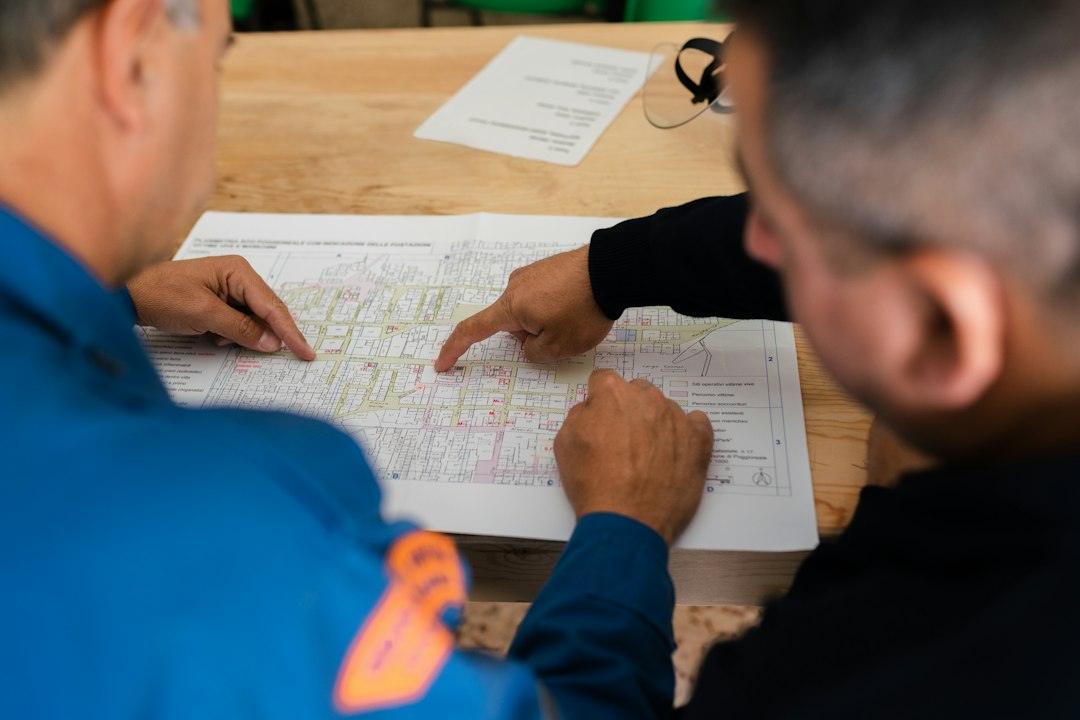
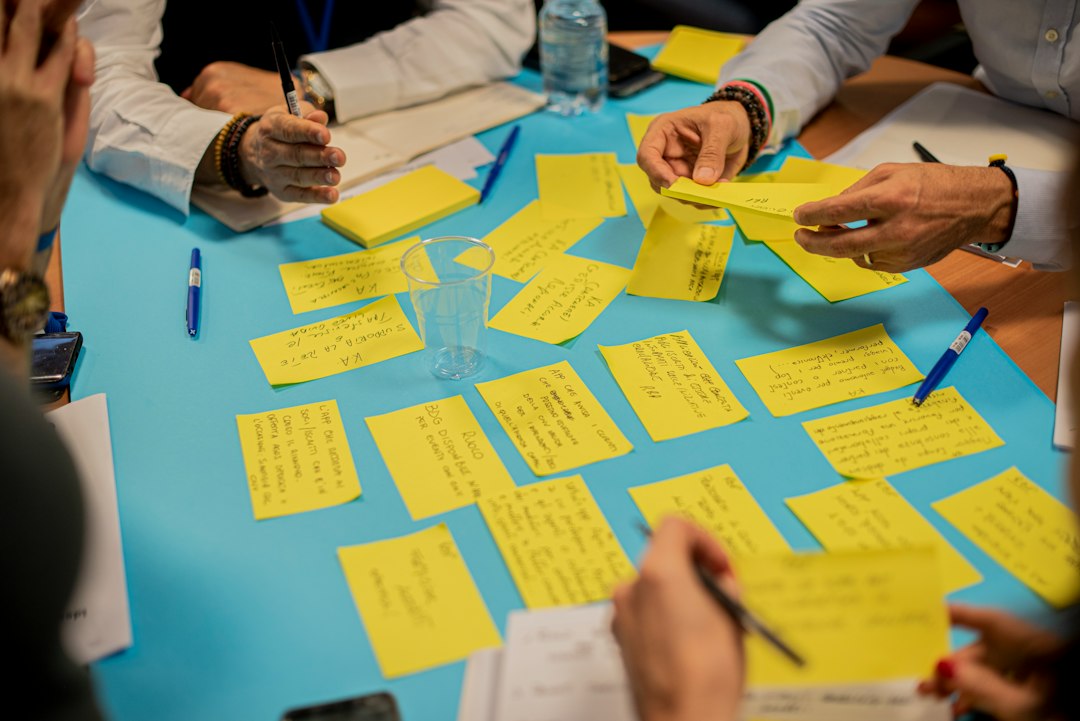
Illustrative photograph. Photo: Campaign Creators / Unsplash.

My name is Magdalena and I have been involved in production since 2010. I started as an Operator, and then developed as a Foreman, Production Planner, and I finally ended up in Lean. In the meantime, I graduated from the Faculty of Management with the specialization of Business Psychology. I did it relatively late, because I focused on practical knowledge, which directed me to this particular field of study. Currently, I am still mainly a Practitioner who is closely related to Lean, process management, as well as the building and managing of teams. I also run workshops and consultations concerning this subject, which is my great passion. As a lady in Lean, I want to show you Lean and Management from a slightly different perspective - lights and shadows, as well as fantastic and absurd features. However, no matter how you look at it, it is, above all, a fascinating path to perfection, which I hope you would like to take with me.