Artificial intelligence can make knowledge work faster. It can search, compare, summarise, draft and generate alternatives in seconds. But speed is not the same as value. Cognitive lean thinking asks a more useful question: which parts of the thinking process should become easier, and which parts must remain deliberately demanding because they create understanding, sound judgment and learning?
The aim is not to minimise human thought. It is to remove cognitive work that adds no value while strengthening the thinking that does. That distinction matters. If we optimise only for shorter task time or more output, we may build a beautifully efficient process that produces shallow decisions, unverified claims and people who can no longer explain why an answer is right.
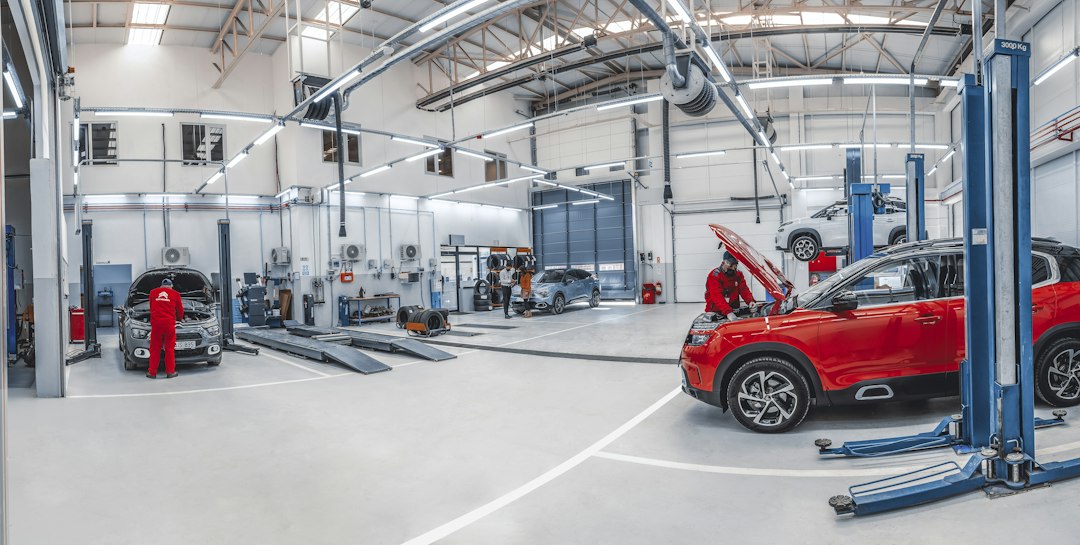
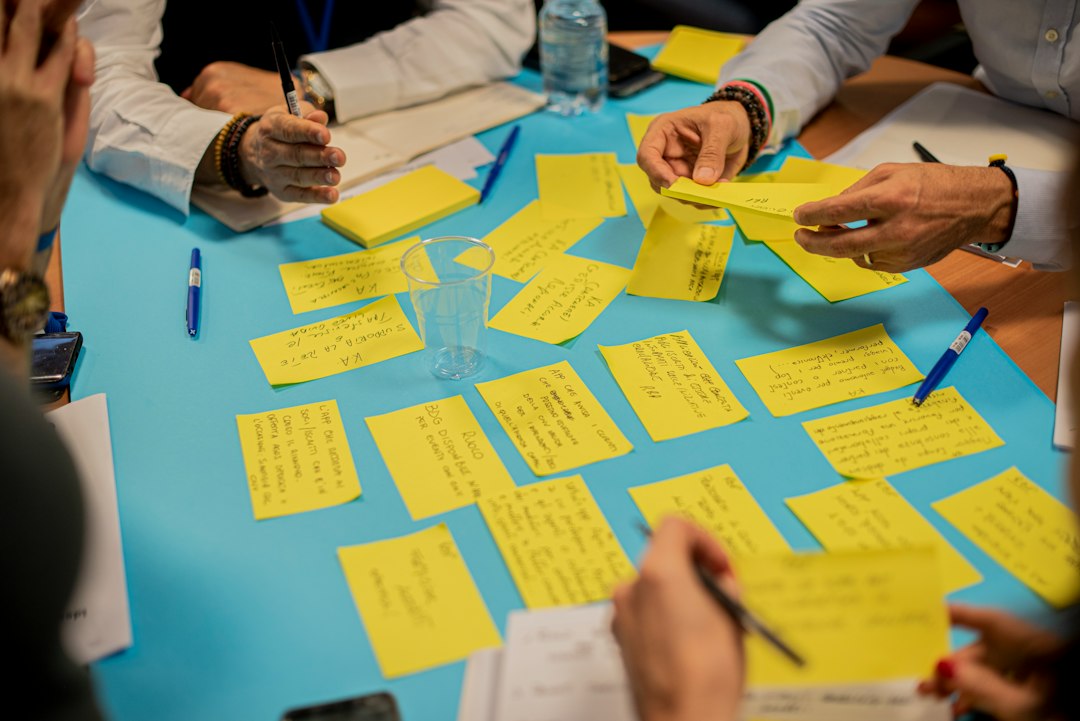
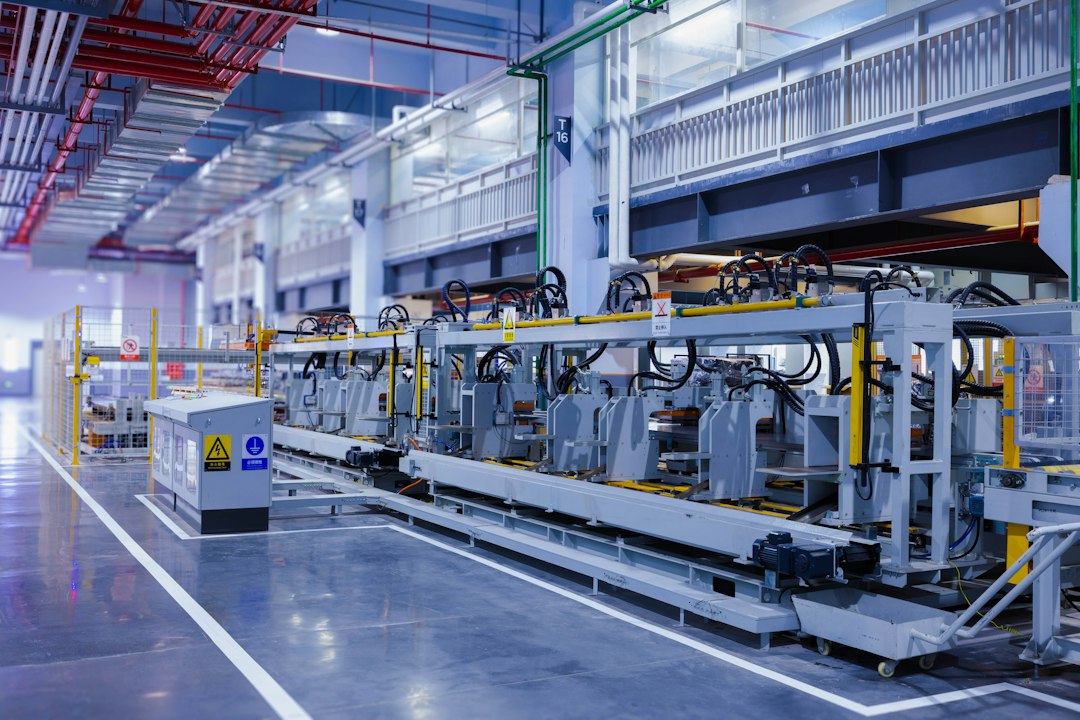
Illustrative photograph. Photo: Oğuzhan Akdoğan / Unsplash.
When speed becomes a false measure of value
In physical processes, Lean helps us see waiting, defects, unnecessary movement and overproduction. Knowledge work has equivalents: searching for the same information twice, switching repeatedly between tools, repairing an answer built on a weak premise, or generating ten reports when one decision is required. AI can reduce some of this friction. It can also multiply it.
A fluent response creates an impression of completion. Yet the real customer may not need a polished document. The customer may need a defensible decision, a risk detected early, a better problem definition or knowledge that can be reused next time. Before asking AI to do anything, define the value of the cognitive process. Otherwise, faster production simply gives us more inventory of words.
Value-creating thinking versus cognitive waste
Not every difficult or time-consuming mental activity is waste. Checking a source, building a counterargument or exploring an uncomfortable alternative may slow the process and still be the most valuable step. The classification depends on purpose, risk and context.
| Value-creating cognitive work | Potential cognitive waste |
|---|---|
| Clarifying the real problem and the decision to be made | Starting analysis before anyone knows what decision it should support |
| Testing evidence, assumptions and causal logic | Accepting a plausible answer because it is fluent and convenient |
| Exploring meaningful alternatives and risks | Generating variants that nobody will evaluate or use |
| Connecting information with local context and experience | Copying generic recommendations that ignore operating conditions |
| Reflecting on what was learned and can be standardised | Repeating prompt-and-correct cycles without improving the method |
Five questions before you remove any mental effort
- What outcome creates value: an answer, a decision, learning, safety or alignment?
- Which judgment requires human context, responsibility or ethical consideration?
- Which processing task can AI perform faster without weakening that judgment?
- How will we detect a confident but incomplete, biased or false result?
- What capability should the person or team retain after the task is finished?
These questions prevent a common mistake: treating all effort as cost. Sometimes effort is the mechanism through which expertise develops.
A practical Human–AI–Human flow
A useful operating model is a Human–AI–Human flow. The human frames the work, AI supports selected processing, and the human returns to evaluate, decide and learn. The sequence matters because the person remains the owner of the problem and the consequences.
1. Human: frame the work
State the problem, intended user, decision, constraints and acceptable evidence. Record an initial hypothesis before viewing the AI answer when independence matters. Define what must not be delegated, including safety decisions, sensitive people judgments and any conclusion the user is not competent to review.
2. AI: process with a defined role
Give AI a bounded job. It might structure notes, compare options, identify missing information, challenge an argument or draft scenarios. Ask it to expose assumptions and uncertainty, not only produce a recommendation. Pull information in response to a need instead of generating content simply because generation is cheap.
3. Human: verify, decide and learn
Return to primary sources, test the logic against operational reality and seek disconfirming evidence. Decide explicitly rather than allowing the generated text to become the decision by default. Finally, capture what changed: the conclusion, the standard of work, the prompt, the checklist or the team’s understanding.
This last stage is often skipped. Without it, the process may deliver a fast output but no improvement in human capability. That is cognitive debt: we save effort now and pay later through weaker judgment, dependence and rework.
Using Lean principles in AI-enabled knowledge work
- Pull: generate only the information required for a defined question or decision.
- Jidoka: stop when the user cannot explain the result, verify its basis or assess its risk.
- Value-stream mapping: map how a question becomes data, interpretation, recommendation and action across people and AI.
- Kaizen: run small experiments, compare outcomes and improve the Human–AI working standard.
These principles shift attention away from the newest tool and toward process design. A stronger model does not repair an unclear purpose, weak evidence or absent accountability.
Run a small cognitive lean experiment
Choose one recurring, low-to-moderate-risk task: preparing a meeting brief, analysing customer comments or drafting an A3 background section. Map the current steps and mark where people wait, search, switch context, duplicate work or correct avoidable errors. Then identify the stages where human interpretation creates value.
Assign AI one bounded role and define a quality gate. For example, AI may cluster customer comments, while a human checks the source statements, tests alternative groupings and decides which themes matter. Compare lead time, defect and rework rates, decision usefulness, and what the team can still explain without the tool. The best experiment improves both flow and retained capability.
What should remain human?
There is no universal list of tasks that must always stay with people. The boundary changes with expertise, consequences and the reliability of available evidence. A practical rule is this: do not outsource a judgment when you cannot evaluate the answer but remain accountable for its effects.
AI can assist with problem framing, but humans must agree on the problem worth solving. It can suggest trade-offs, but people must decide which values apply. It can detect patterns, but domain experts must assess whether those patterns are meaningful. It can critique a proposal, but leaders still own the decision and its consequences.
Cognitive lean thinking therefore is not anti-AI. It is a disciplined way to use AI without confusing assistance with ownership. The goal is a process that is faster where speed helps, slower where reflection protects quality, and always clear about who is thinking, who is deciding and who is learning.
Frequently asked questions
Is cognitive offloading always harmful?
No. People have always used notes, calculators and colleagues to extend cognition. Offloading is useful when it frees capacity for higher-value reasoning. The risk appears when support replaces the evaluation, practice or understanding needed to retain competence.
How can a team measure cognitive lean thinking?
Combine flow measures with quality and learning measures. Track task lead time and rework, but also source-verification failures, decision reversals, the ability to explain conclusions, and whether a reusable standard or insight emerged.
Can AI make an organisation more Lean?
AI can support Lean work, but volume and speed alone do not make a process Lean. Improvement occurs when technology helps deliver customer value, reveal problems earlier, strengthen learning and reduce waste without obscuring responsibility.
Source and further reading
- Iwona Burka, “Does AI raise the bar for our thinking?”, LinkedIn post.
- Iwona Burka, “From Lean Thinking to Cognitive Lean Thinking”, LinkedIn article (Polish).
- Mohammad Shahin et al., “Beyond Material Flow with Cognitive Waste Theory”, Big Data and Cognitive Computing.
- Carlton L. Robinson and Taylor Frances Drury, “The Cognitive Lean Loop”, SSRN preprint.
- “Generative AI, Cognitive Offloading, and Learner Agency in Higher Education”, a scoping review in Behavioral Sciences.

Dr. Iwona Burka holds a Ph.D. in Economics and has carved a distinguished career as a business trainer, researcher, adviser, and university lecturer. Celebrated for her contribution to various papers on management systems, she's also co-authored the seminal book, "Lean Service in theory and practice". With years immersed in the real-world implementation of management systems, Dr. Burka excels at simplifying complexities and excess. She fervently champions the optimization of organizational processes using the Lean approach combined with the Kaizen philosophy.