A frontline problem-solving culture does not begin with the perfect A3, a flawless 5 Why analysis or another mandatory template. It begins the moment someone sees a gap and decides that it is both safe and worthwhile to say it aloud.
A team can be trained in several Lean methods and still hide defects, work around delays or wait for a manager to make every decision. The deeper gap is often permission, ownership and trust. In a recent LinkedIn post, Paul Steven argues that tools can optimise problem solving, but organisations first need people to participate. This article develops that idea into a practical operating model for leaders.
The sequence many organisations reverse
When results deteriorate, leaders understandably look for more control. They introduce a form, require approval from a central improvement team and ask employees to follow one “correct” route. The intention is consistency. The unintended message can be very different: do not touch the problem until an expert authorises you.
A healthy problem-solving culture develops in the opposite sequence:
- Make problems discussable. People can describe a gap without being treated as the cause of it.
- Give teams meaningful agency. Employees know which actions they can test themselves and when escalation is required.
- Create fast feedback. Leaders respond to raised issues, remove barriers and review what was learned.
- Add discipline with the right method. Tools are introduced when they help the team understand a problem or run a better experiment.
This is not an argument against standards. It is an argument for putting standards in service of learning. A problem-solving form should improve the quality of thinking, not become evidence that thinking supposedly happened.
Why capable people stop raising problems
Employees learn from the organisation’s reactions. If reporting a defect brings blame, extra paperwork or silence, not reporting it becomes rational. If every countermeasure needs several approvals, the person closest to the work learns to wait. If managers routinely take over, employees learn that ownership belongs higher in the hierarchy.
Psychological safety is therefore operational infrastructure. It does not mean lowering expectations or avoiding difficult questions. It means people can share evidence, admit uncertainty and challenge an assumption without being humiliated. Accountability then becomes stronger because the team can work with the facts.
A five-layer model for a frontline problem-solving culture
Leaders can assess the environment through five connected layers. A weakness in an earlier layer limits the value of everything above it.
| Layer | Leadership responsibility | Evidence in daily work |
|---|---|---|
| Permission | Welcome bad news and separate the messenger from the problem. | People raise small abnormalities before they become incidents. |
| Clarity | Define the standard, the gap and the purpose of improvement. | Teams distinguish a real problem from a preference or complaint. |
| Agency | Set clear decision boundaries for local action and escalation. | Employees run safe, reversible tests without waiting for unnecessary approval. |
| Coaching | Ask questions that develop judgment instead of supplying every answer. | Teams explain what they know, what they assume and what they will test next. |
| Learning | Review outcomes and spread useful knowledge across teams. | Countermeasures are checked, adapted and shared rather than merely closed. |
Empowerment is not “everyone may change anything.” A team may test a visual cue, need specialist input before altering equipment parameters and be prohibited from changing a safety control. Clear boundaries increase action because people know where their authority ends.
Leader standard work that builds agency
Culture becomes credible through repeated management behaviour. Leaders can start with five simple routines:
- Ask about gaps, not culprits. Begin with “What prevented the work from meeting the standard?” rather than “Who made the mistake?”
- Distinguish escalation from takeover. Help the team obtain resources or remove a constraint while keeping thinking and ownership as close to the work as possible.
- Respond visibly. Every raised issue needs acknowledgement and a next step. Silence teaches people that speaking up has no value.
- Review the reasoning. Discuss the evidence, assumptions and learning from the test, not only whether the result was successful.
- Recognise responsible discovery. Thank people for making risk, waste or instability visible—even when the answer is not yet known.
When problem-solving tools should enter
“Culture before tools” does not mean postponing methods for years. It means introducing a method in response to a real need. A short structured analysis may help when a causal chain is unclear. An A3 may be useful when several functions must align around a complex gap. A PDCA cycle may provide discipline when a team needs to test a countermeasure and compare the result with a prediction.
Readiness is behavioural: people can describe the gap with facts, own the next step, test rather than defend a preferred solution, and return to the result. The tool then reduces ambiguity; before that, it is likely to become paperwork.
A 30-day experiment for leaders
Instead of launching a large culture programme, test the operating conditions in one team for 30 days:
- Week 1 — Listen: ask for abnormalities during the daily meeting and record how leaders respond.
- Week 2 — Clarify: publish simple green, amber and red decision boundaries for local action, consultation and escalation.
- Week 3 — Coach: use a consistent sequence of questions: What should be happening? What is happening? What evidence do we have? What is the next safe test?
- Week 4 — Learn: review completed tests, identify one recurring problem and apply a suitable structured method.
Track measures that reflect flow and learning: the number of abnormalities surfaced, time to first response, percentage of actions checked after implementation and recurrence of the same problem. Avoid rewarding the number of forms completed. That metric can drive activity while hiding whether capability has improved.
Frontline problem-solving culture checklist
Before prescribing more training, leaders should ask:
- Can an employee identify a problem without fearing personal blame?
- Does the team have a visible standard against which to describe the gap?
- Are decision rights for small, reversible experiments explicit?
- Do leaders acknowledge issues quickly and explain what happens next?
- Are questions used to develop thinking rather than to expose ignorance?
- Are unsuccessful tests examined for learning rather than quietly abandoned?
- Are effective countermeasures shared beyond the team that discovered them?
- Are tools selected for the problem, rather than the problem forced into a preferred tool?
If several answers are “no,” another template is unlikely to be the first remedy. Build the conditions in which people can see, own and learn from problems. Then methods become accelerators rather than administrative gates.
Frequently asked questions
Is psychological safety the same as avoiding accountability?
No. Psychological safety makes evidence and uncertainty discussable; accountability clarifies commitments and follows through on actions. Strong problem-solving cultures need both. People should be able to expose a gap without blame and still be expected to investigate, act within agreed boundaries and check the result.
Should frontline teams solve every problem themselves?
No. Problems involving safety, regulation, major investment or cross-functional risk require escalation and specialist support. The goal is not total autonomy but the shortest responsible decision path. Teams need to know what they may change, when to consult and when to stop.
When should a Lean tool be introduced?
Introduce a tool when it answers a real need in the team’s thinking—for example, defining a gap, examining causes, coordinating stakeholders or testing a countermeasure. Teach the minimum method needed for the current problem, coach its use and review whether it improved learning.
Source and further reading
- Paul Steven, “Encouraging Problem Solving in the Workplace”, LinkedIn. The post provides the starting insight for this original development of a culture-first operating model.
- Paul Steven, “Logical Thinking – Problem-Solving Essentials”, Lean Community. This complementary article focuses on structured inquiry after a problem has become visible and discussable.
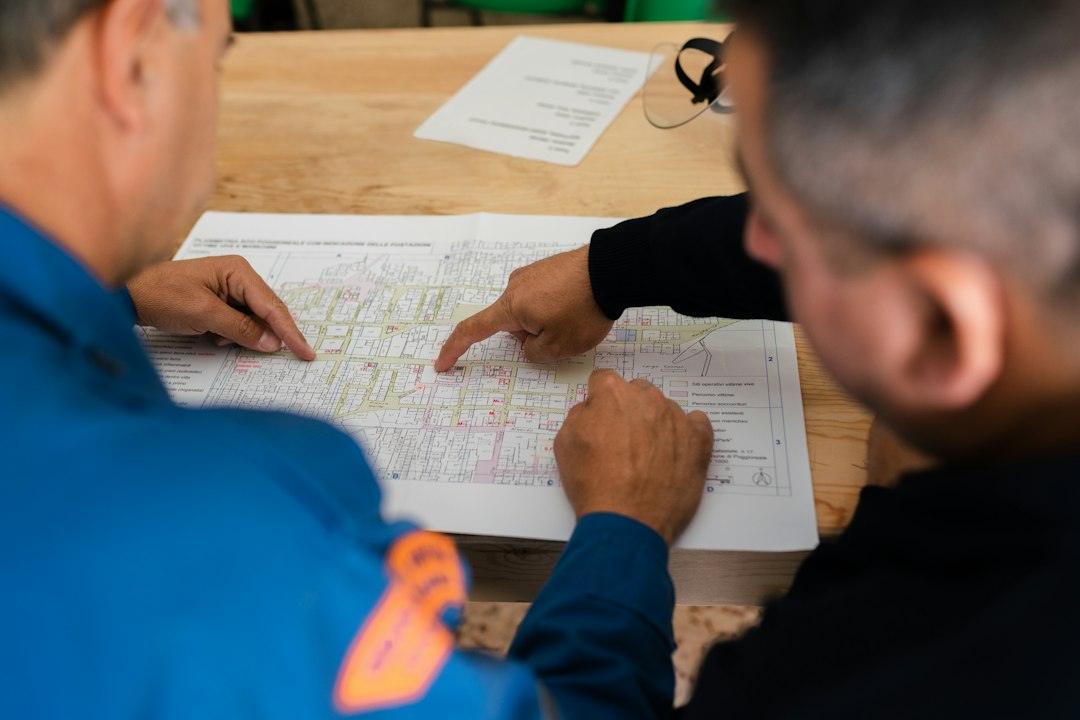
Illustrative photograph. Photo: Ana Lucia Videira / Unsplash.

Positive improvement consultancy. Every business should improve every day, TSR makes changing easier & quicker through proven approach to process, product & people issues, improving operating costs to best in class. Typically, 20% improvement in operational measures delivered within 90 days will drive over 10% positive change in costs. TSR - Transform & Sustain Results.
Specialties:
- Communication of Improvement Concepts at all levels of business
- Influencing Business Process Change
- Negotiations regarding implications of Business Process Change
- Delivering Business Process Change within Manufacturing & related Transactional areas (S&OP, Logistics, Warehousing & Office)